
Curtain Guide Test 3
How to Size & Install TwoPages Curtains the Right Way
Hi friends! If there's one design question I get asked more than almost anything else, it's about curtains — specifically, how to size them so they look custom-made instead of "off the rack."
I'm a big fan of TwoPages for exactly this reason. Their curtains come in a huge range of colors, fabrics, and linings, and once you know how to measure and hang them, they read like a custom window treatment for a fraction of the price.
In this post, I'm walking you through everything: how to measure for width and length, where to mount your rod, how fullness (or "stack width") affects the finished look, and which colors and materials I tend to gravitate toward. Grab a tape measure and let's get into it.
[FEATURED IMAGE PLACEHOLDER: bright living room with floor-length pinch pleat curtains framing a large window, soft natural light]
Table of Contents
- Why Curtain Sizing Matters
- How to Measure Curtain Width
- Choosing the Right Curtain Length
- Where to Place Your Curtain Rod
- Color & Material Options
- Lining Options & Why They Matter
- Installation Tips
- Practical Takeaways
- FAQ
Why Curtain Sizing Matters
Curtains are one of those details that can make or break a room. Too short, too skimpy, or hung too close to the window frame, and even a beautifully designed space can feel a little "off."
On the flip side, full, floor-length panels hung at the right height and width instantly make ceilings feel taller and windows feel grander. It's one of the easiest (and most affordable) upgrades you can make to a room.
The good news? Getting it right is mostly about following a few simple formulas. Once you know them, you'll never second-guess a curtain order again.
[IMAGE PLACEHOLDER: before and after of a window with short, narrow curtains versus full-length, wide-hung curtains]
How to Measure Curtain Width
This is the step people skip most often, and it's the one that has the biggest impact on how "full" your curtains look.
Here's my general rule of thumb:
- Windows under 50" wide: order panels that total 1 to 2 times the width of your window
- Windows over 50" wide: order panels that total 1 to 1.5 times the width of your window
- Absolute max per panel: I'd never go wider than 150" per panel — anything larger gets heavy and overly bulky
So if you have a 40" wide window and want a really full, luxurious look, you might choose two panels that total around 75" wide combined (roughly 37–38" per panel). That's the kind of fullness that gives curtains that soft, "expensive" drape.
[IMAGE PLACEHOLDER: tape measure across a window frame, measuring width for curtain panels]
[PRODUCT LINK PLACEHOLDER: TwoPages pinch pleat curtain panel, 50" wide]

Choosing the Right Curtain Length
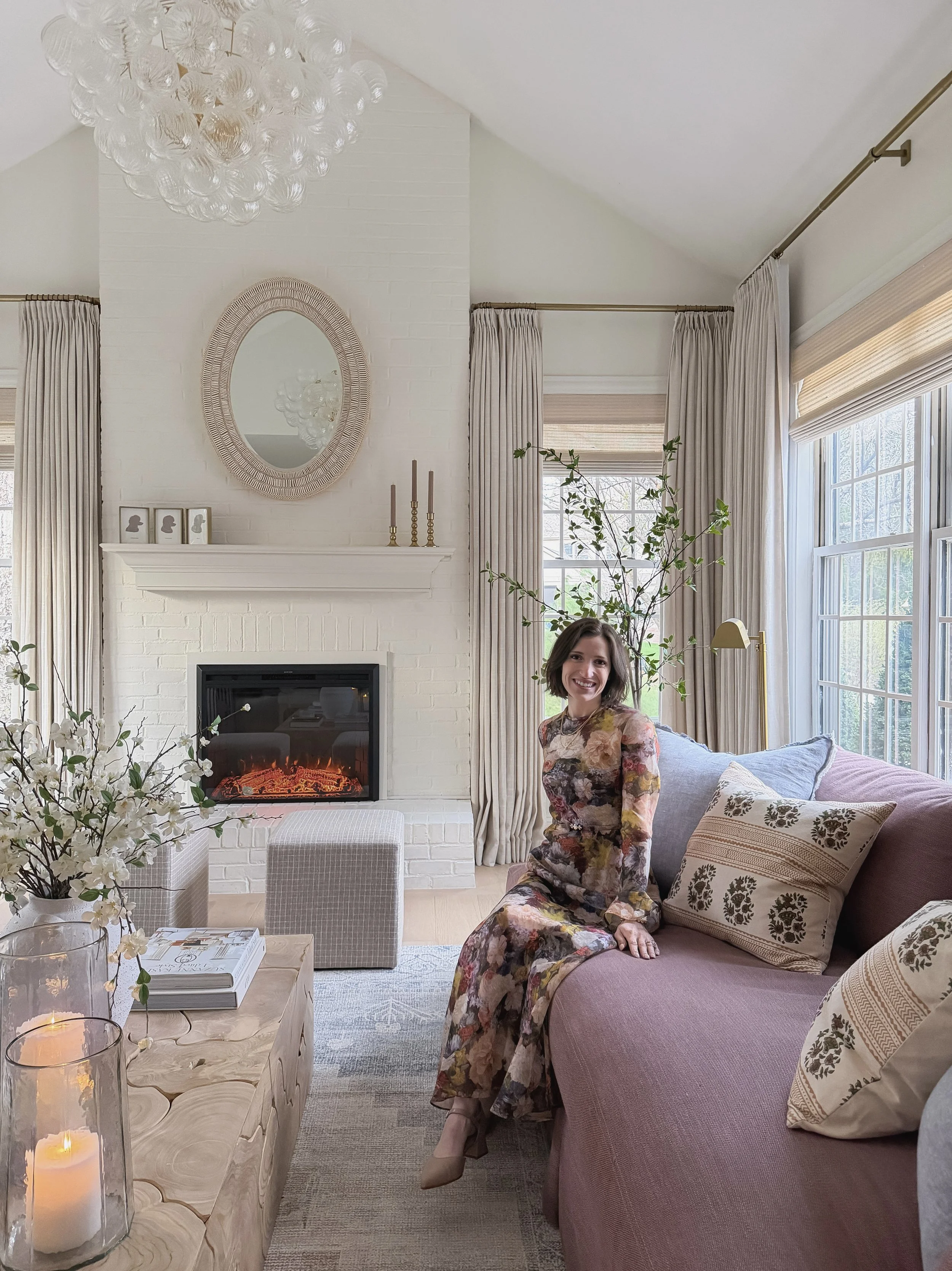
For length, I'm almost always team floor-length — it's the most timeless option and works in nearly every style of home.
A few notes on length:
- Measure from where your rod will sit down to the floor
- Curtains should just graze the floor or break slightly, like a pair of well-tailored trousers
- Avoid stopping a few inches above the floor — this tends to make a room feel smaller and less finished
If you love a more relaxed, romantic look, a slight "puddle" (an extra inch or two of fabric pooling on the floor) can be gorgeous in a bedroom or formal living room. For high-traffic areas, I'd stick with a clean floor-skim instead.
[IMAGE PLACEHOLDER: close-up of curtain hem softly grazing hardwood floor]
Where to Place Your Curtain Rod
Rod placement is the other half of the sizing equation, and it affects both height and width.
Height:
- Mount your rod as close to the ceiling as possible, or at least a few inches above the window frame
- The higher the rod, the taller your windows (and ceilings) will appear
Width:
- Extend your rod well beyond the window frame on each side — this allows curtains to stack to the side and lets in more natural light
- This "stack width" is the width of your curtains when they're pulled fully open and gathered to the sides
For a 40" wide window, for example, you might extend your rod so the curtains stack to about 75" total across — giving you generous panels on either side without blocking the glass.
[IMAGE PLACEHOLDER: wide shot of a window showing curtain rod extending beyond the window frame on both sides]
[PRODUCT LINK PLACEHOLDER: brass curtain rod, extendable]
Color & Material Options
TwoPages offers a great range of colors and fabrics, so there's a lot of room to play depending on your room's mood.
A few of my go-to choices:
- Ivory or warm white — soft, timeless, and works with almost any wall color (this is my most-used choice for a classic, coastal-grandmother feel)
- Soft blue-grey — a quiet, sophisticated option for bedrooms or formal living spaces
- Marble or off-white tones — great for layering with a Roman shade underneath for texture
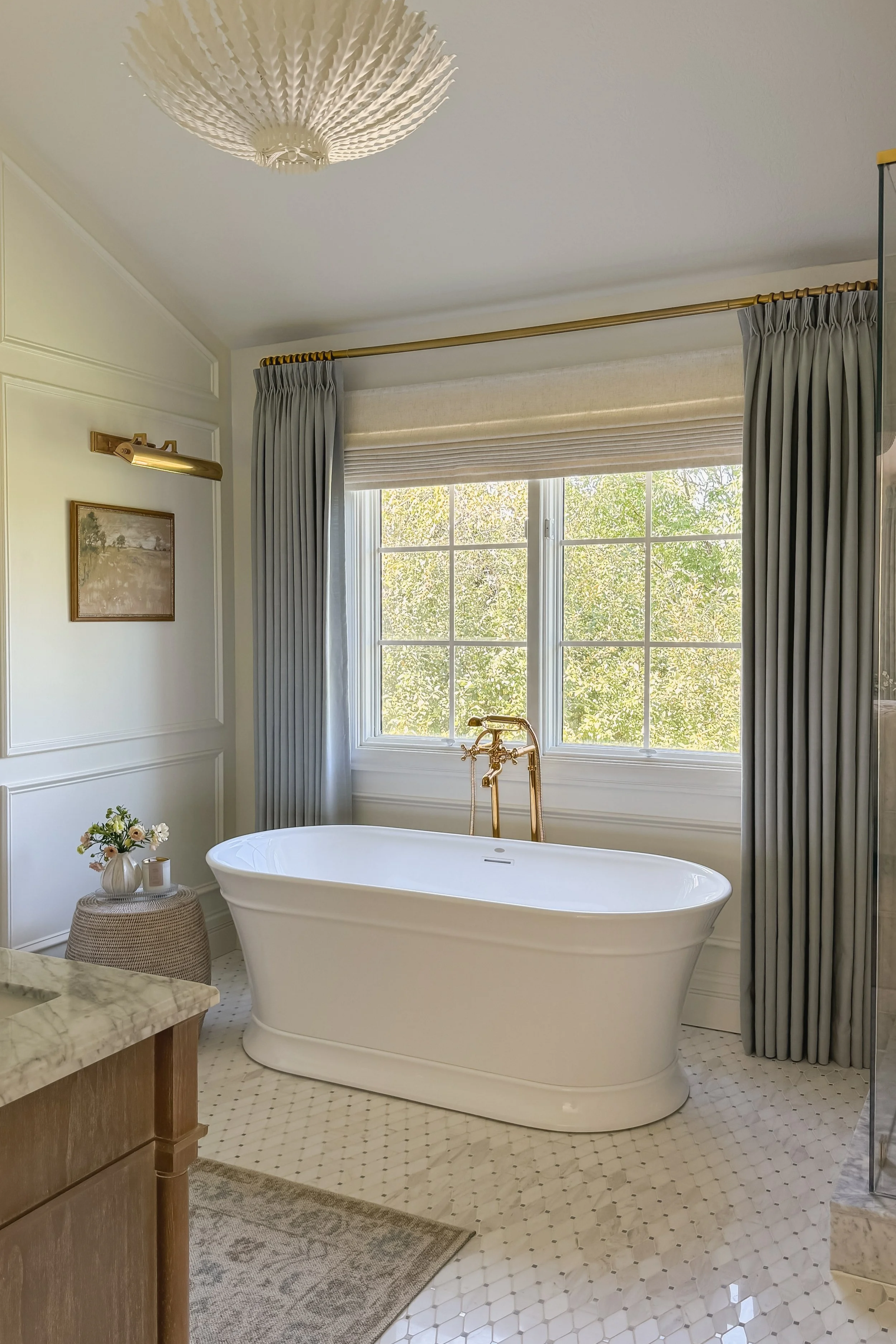
[IMAGE PLACEHOLDER: fabric swatches in ivory, soft blue-grey, and marble tones laid out together]
[PRODUCT LINK PLACEHOLDER: TwoPages ivory white pinch pleat curtain]
[PRODUCT LINK PLACEHOLDER: TwoPages soft blue-grey linen curtain]
Lining Options & Why They Matter
This is a detail that's easy to overlook, but it makes a huge difference in how your curtains look and perform.
Most curtain brands (TwoPages included) offer several lining weights:
- Privacy liner — lightweight, mostly for daytime privacy
- Room darkening — a great everyday choice for bedrooms and living rooms
- Blackout liner — heavier, blocks nearly all light
- Thermal blackout — the heaviest option, great for energy efficiency and sound dampening
My honest opinion? I do not recommend going unlined. Lined curtains have that high-end, custom look, and they hang with much better structure and weight. Unlined panels tend to look thin and a little flat, no matter how nice the fabric is.
For most rooms, a room darkening lining is my sweet spot — it gives you that polished drape without going full blackout.
[IMAGE PLACEHOLDER: side-by-side comparison of lined versus unlined curtain fabric draping]
Installation Tips
A few last things to keep in mind once your curtains arrive:
- Steam, don't iron — hang your curtains for a day or two and let gravity (plus a handheld steamer) work out wrinkles
- Use the right rings or hooks — pinch pleat curtains typically need pinch pleat clip rings for a clean, tailored look
- Double-check your rod brackets are anchored into studs, especially for heavier lined panels
- Step back and look — after hanging, stand across the room and check that both panels fall evenly and the fullness looks balanced
[IMAGE PLACEHOLDER: hands adjusting curtain rings on a rod during installation]
Practical Takeaways
- Order panels totaling 1–2x your window width (less fullness for wider windows)
- Hang curtains floor-length, just grazing or lightly puddling on the floor
- Mount your rod high and wide — close to the ceiling, extending beyond the window frame
- Choose a lined fabric (room darkening is my go-to) for the most polished look
- Steam after hanging instead of ironing for a natural, soft drape
FAQ
How much wider should my curtains be than my window? For windows under 50" wide, aim for panels totaling 1–2 times the window's width. For windows over 50" wide, 1–1.5 times is usually plenty for a full look without being overwhelming.
How high should I hang my curtain rod? As close to the ceiling as your space allows, or at least a few inches above the window frame. This creates the illusion of taller windows and ceilings.
Should curtains touch the floor? Yes — for a finished, custom look, curtains should just graze or very lightly pool on the floor. Stopping short of the floor tends to make a room feel smaller.
Do I need a curtain lining? I'd recommend it. Lined curtains drape better, look more substantial, and offer light control and privacy that unlined panels just can't match.
What's the best curtain length for a window with a deep sill? Floor-length still works beautifully — just make sure your rod is mounted above the window frame so the curtains hang past the sill without bunching.
I hope this takes some of the guesswork out of your next curtain project! If you have questions about your specific windows, drop them in the comments — I love talking through sizing and fabric choices.
And if you're working on a full room refresh, check out my [related post on choosing curtain colors for a cohesive home palette] for more inspiration.
Suggested meta description: Learn how to measure, size, and hang TwoPages curtains for a custom, high-end look — including width, length, rod placement, and lining tips.
Suggested tags/categories: Window Treatments, Curtains & Drapery, Home Decor Tips, Interior Design Basics, TwoPages
Image & product placeholders used:
- [FEATURED IMAGE PLACEHOLDER] — Bright living room with floor-length pinch pleat curtains
- [IMAGE PLACEHOLDER] — Before/after of short vs. full-length curtains
- [IMAGE PLACEHOLDER] — Tape measure across window for width
- [PRODUCT LINK PLACEHOLDER] — TwoPages pinch pleat curtain panel, 50" wide
- [IMAGE PLACEHOLDER] — Curtain hem grazing the floor
- [IMAGE PLACEHOLDER] — Curtain rod extending beyond window frame
- [PRODUCT LINK PLACEHOLDER] — Brass extendable curtain rod
- [IMAGE PLACEHOLDER] — Fabric swatches (ivory, blue-grey, marble)
- [PRODUCT LINK PLACEHOLDER] — TwoPages ivory white pinch pleat curtain
- [PRODUCT LINK PLACEHOLDER] — TwoPages soft blue-grey linen curtain
- [IMAGE PLACEHOLDER] — Lined vs. unlined curtain comparison
- [IMAGE PLACEHOLDER] — Hands adjusting curtain rings during installation