
The Ultimate Curtain Guide For Measuring and Installing TWOPAGES Curtains
Everything I wish I'd known before ordering my first set of custom curtains — measurements, mounting, lining, and color recommendations included.
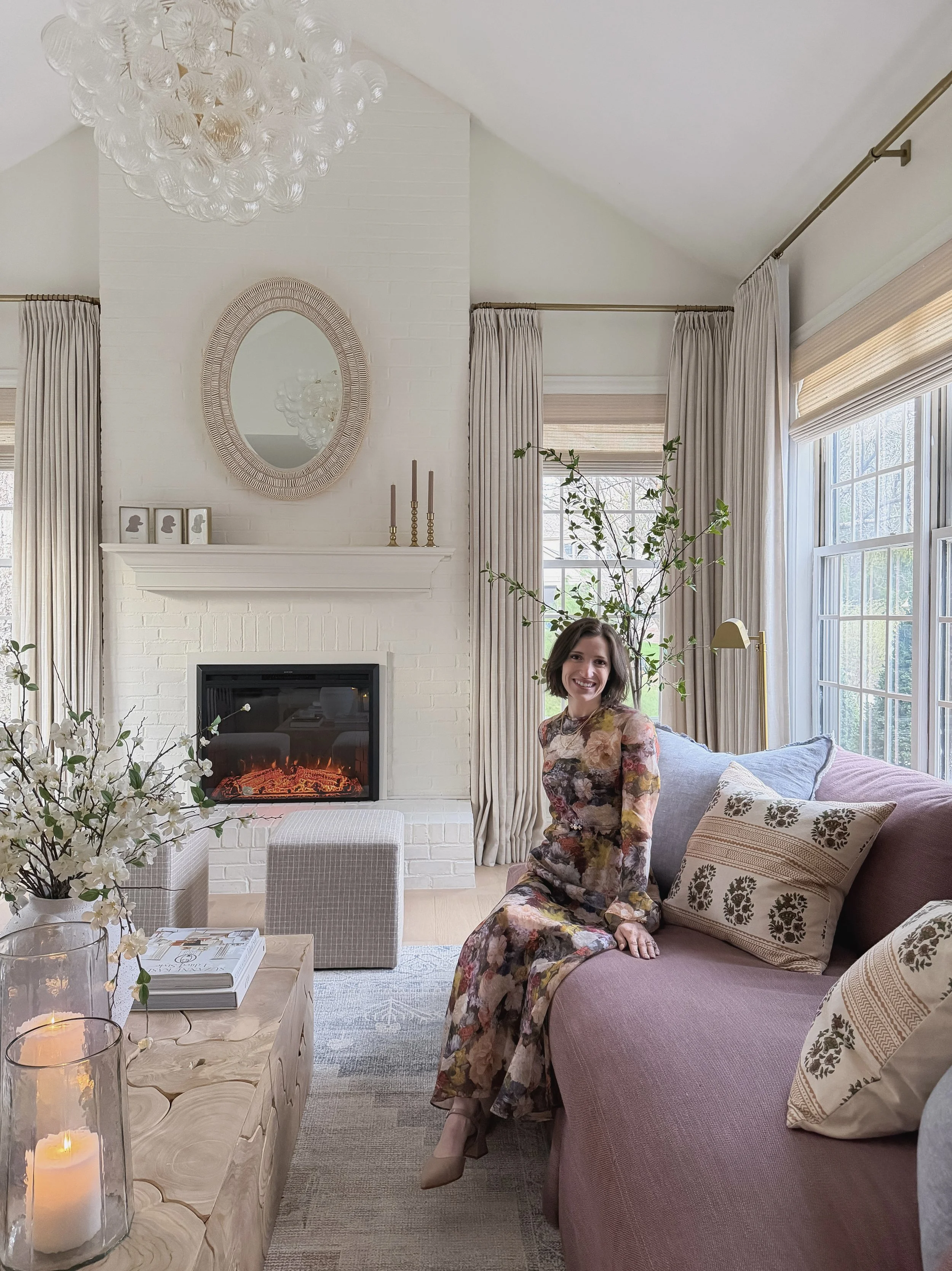
Please keep in mind that my exclusive coupon code BLUSHINGBOHO never expires and will get you the highest discount that TWOPAGES is currently offering. While the discount fluctuates from month to month, it will always offer you the deepest discount on everything on the TWOPAGES website.
Topics: Curtains · Roman Shades · Window Hardware
Table of Contents
- Why Layering Curtains and Shades Works
- How to Measure For Roman Shades
- How to Measure for Curtains
- Choosing the Right Lining
- Color and Material Options I Love
- Hardware: Rods, Rings, and Mounting
- Motorized vs. Cordless Roman Shades
- FAQ
Why Layering Curtains and Shades Works So Well
I get asked about my curtains more than almost anything else in my home, and honestly? I get it. There's something about a beautifully dressed window that makes a whole room feel finished. If you've been eyeing TWOPAGES curtains and roman shades but feel a little overwhelmed by the sizing and installation process, you're in the right place.

Layering a roman shade underneath a floor-length curtain panel gives you the best of both worlds. The shade handles your everyday privacy and light control, while the curtains add softness, height, and that custom, tailored look. It's a combination I use in nearly every room of my house, and once you get the hang of measuring and installing these curtains, it's honestly not as complicated as it looks.
In this post, I'm walking you through exactly how I size, place, and style my TWOPAGES curtains and roman shades — from measuring your window to picking a lining to choosing colors that'll actually work in your space. Let's get into it.
How to Measure For Roman Shades
Section 02
First you need to decide: are you doing an inside mount or an outside mount?
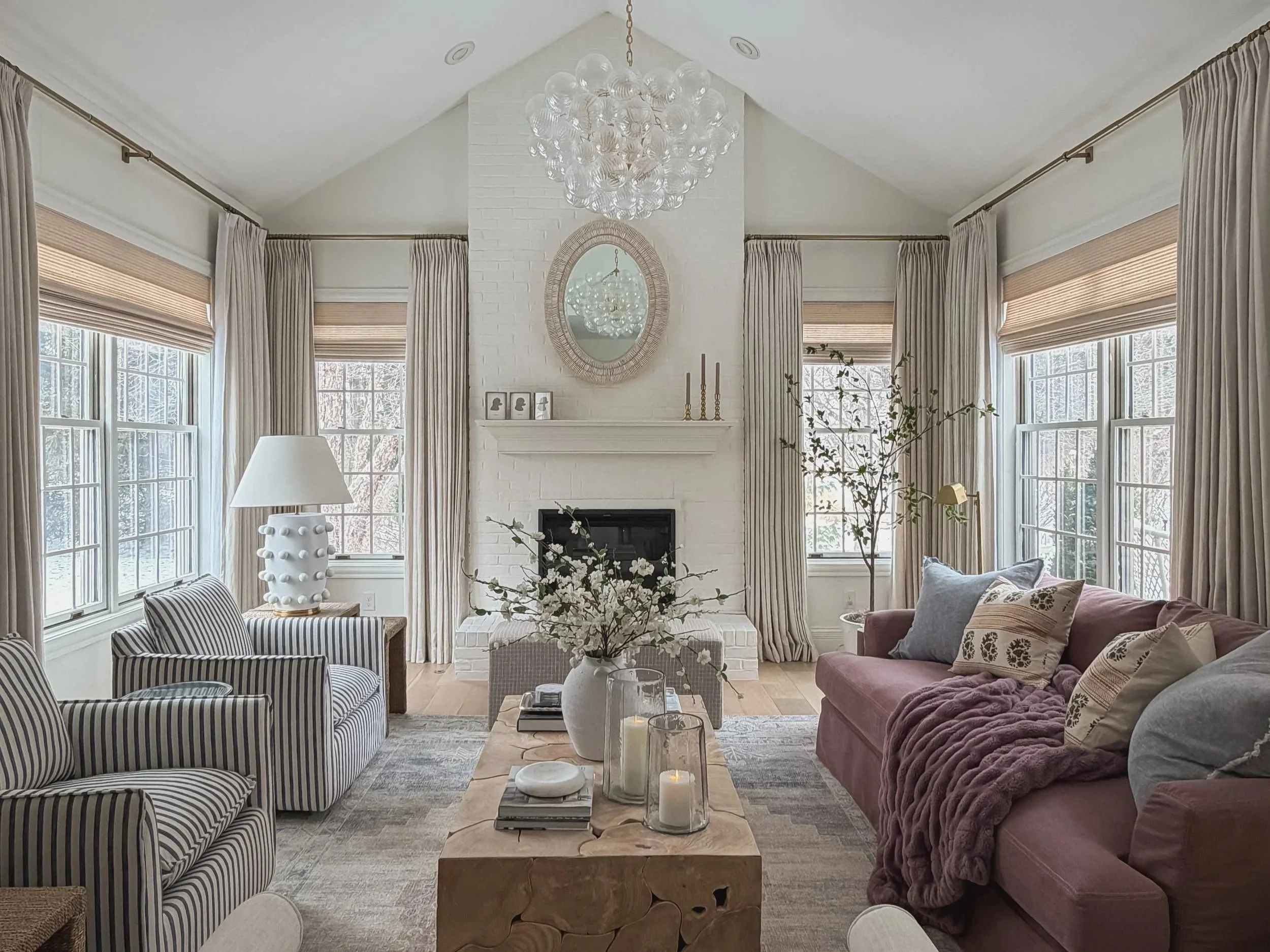
Inside Mount Measuring
An inside mount shade sits inside the window frame, which gives a clean, built-in look. Inside mount works best when your window frame depth is at least 2"-4" depending on the shade style you choose. The depth required varies between cordless and motorized shades, with motorized shades requiring at least 4" of depth.
> Inside Mount Measuring Instructions
Measure the inner window width and subtract 3/8" — this gives the shade a little wiggle room so it doesn't rub against the frame.
Measure the inner window height exactly. Do not subtract anything for inside mount height.
Outside Mount Measuring
If your window frame depth is less than 2", or you just prefer the look of a shade mounted outside the frame (it can make a window look bigger), go with an outside mount.
> Outside Mount Measuring Instructions
Measure the window width including the mouldings, and add 1/2".
Measure the window height including the mouldings, and add a minimum of 3".
If you'd like more resources on how to measure for shades, please see TWOPAGES shade measuring instructions here.
Shop the bamboo shades I have in almost my entire home:
- Cordless Bamboo Roman Shades in Lay – Marble White
- Motorized Bamboo Roman Shades in Lay - Marble White


Mounting Height
I almost always mount my curtain rods as close to the ceiling as possible — usually leaving just a few inches of clearance between the rod and the ceiling or crown moulding. I generally say to plan on mounting your curtain rod between 3-5" below the ceiling or moulding.
Mounting high (rather than right above the window frame) draws the eye up and makes ceilings feel taller. Even in rooms with standard 8-foot ceilings, this trick makes a noticeable difference.
Curtain Width: How Full Should Your Panels Be?
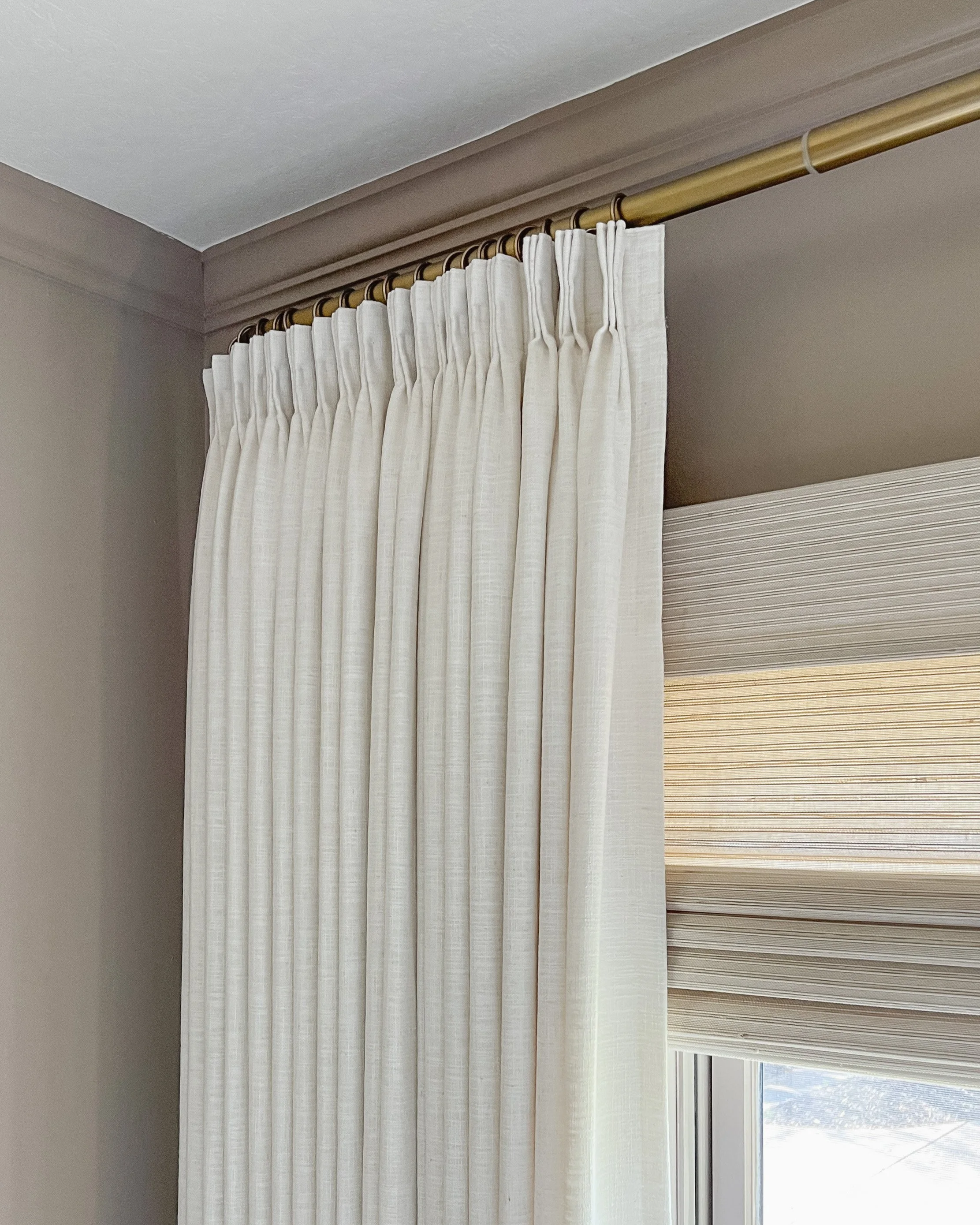
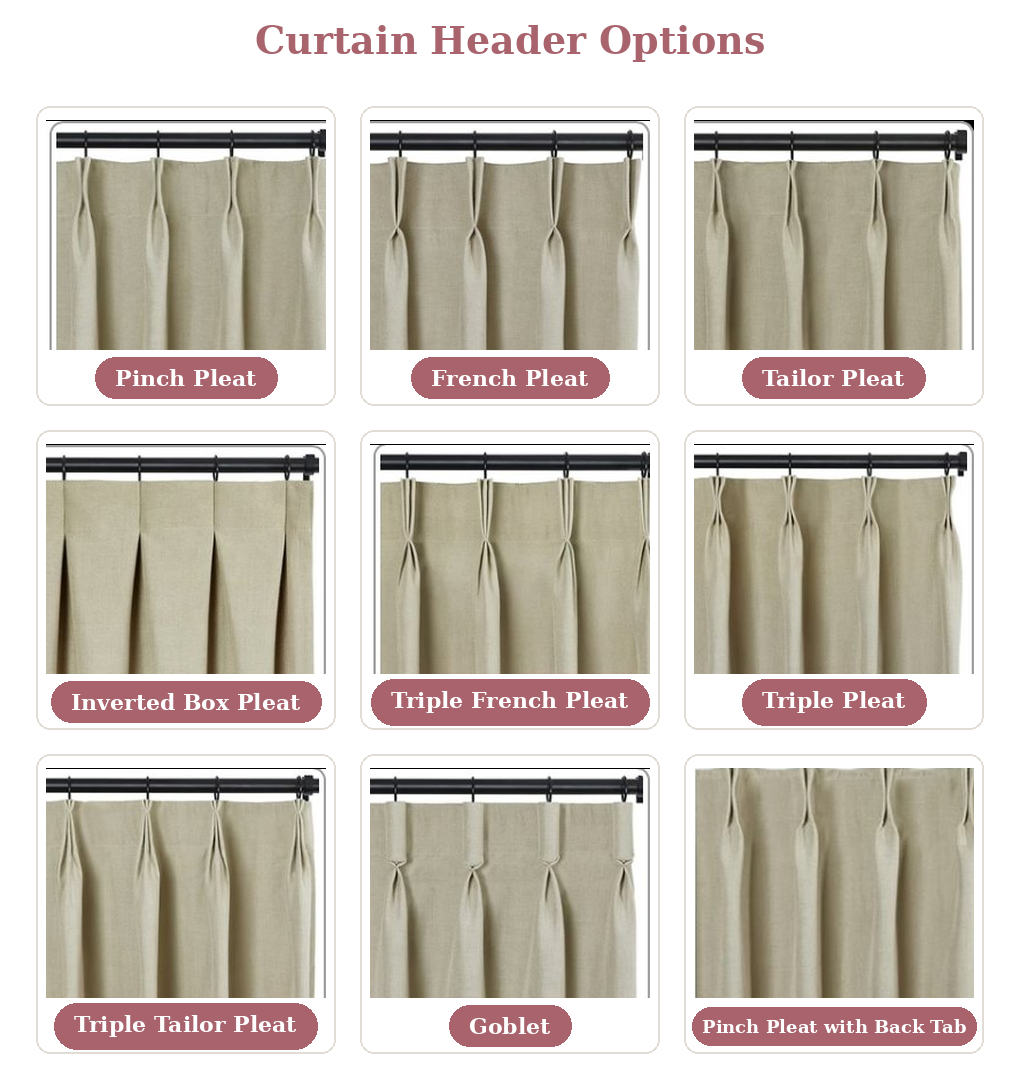
This is where stack width comes in. Stack width is simply how wide your curtains end up when they're pulled all the way open to the sides of your window. I only use the triple pleated header style, but have come up with a simple formula for that style to quickly determine the stack width.
Stack Width = panel width x 0.18
For example, if my curtain panel width is 100", the stack width would be approximately 18"
100" (PANEL WIDTH) x 0.18 = 18" (STACK WIDTH)
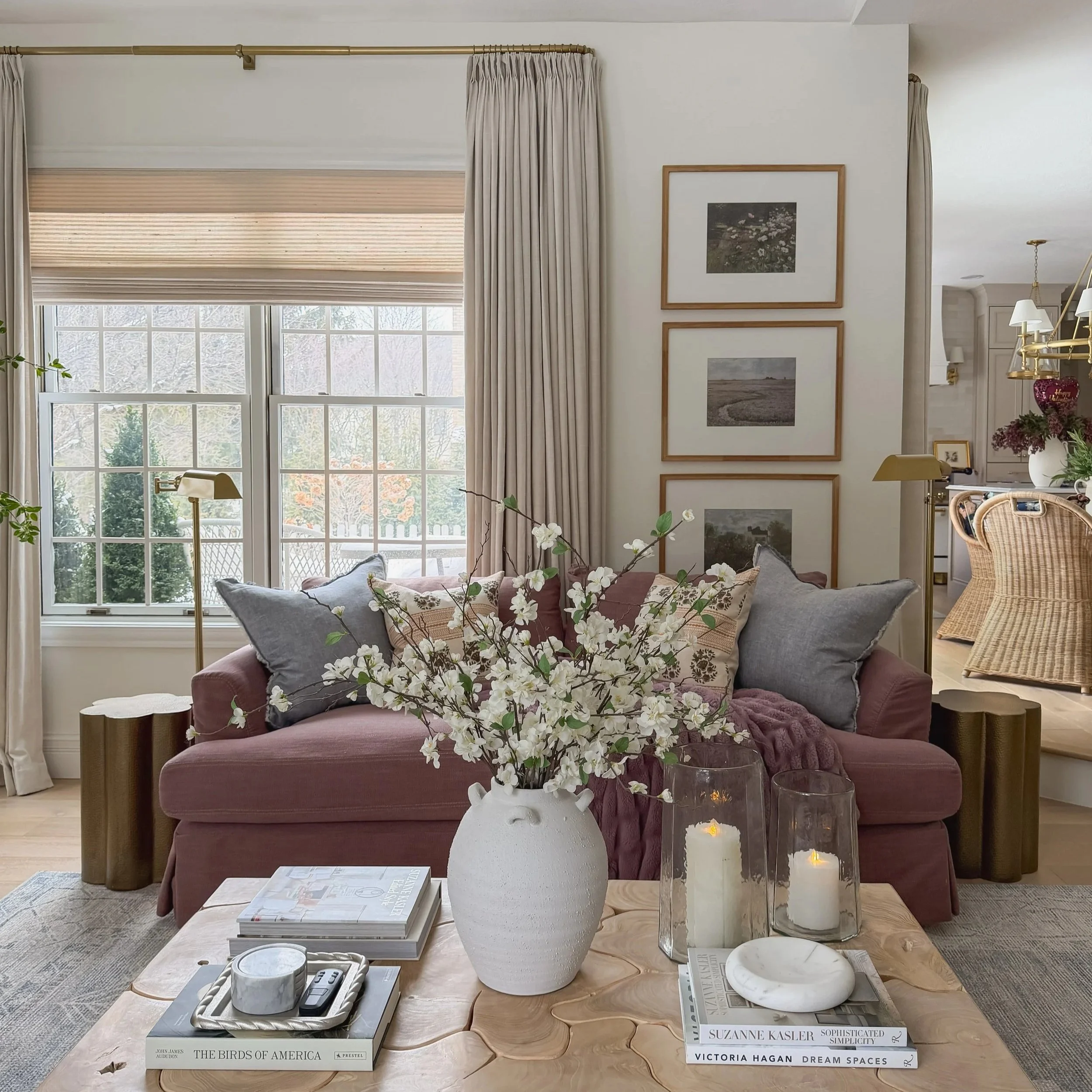
Please keep in mind that this formula to calculate the stack width only applies to the triple pleated header style. There are many styles of headers, but personally I choose to use the triple pleated because I like the traditional and formal look. There’s an image with all the header options below.
Here's my general rule of thumb for total panel width (per panel, not combined):
- Measure your window width. This is your starting point for everything else.
- Decide on fullness based on window size. For windows under 50" wide, aim for 1–2x the width of the window per panel. For windows over 50" wide, aim for 1–1.5x the width per panel.
- Don't go overboard. The absolute max I'd ever recommend is 150" per panel — anything wider becomes incredibly heavy and impractical to find curtain rods sturdy enough to support the weight of the curtains.
Floor Length
For floor-length panels, I like my curtains to just barely kiss the floor, or break very slightly — think a half inch of "puddle." Too short and it looks like you bought the wrong size; too long and they'll drag and collect dust.
If you have a curtain rod already installed, measure from the bottom of the rod to the floor and subtract 1" to accomodate for the drop of the curtain rings.
If you don't have a rod installed, measure from the floor to the ceiling (or crown moulding), and subtract 3-5" to allow you plenty of room to install the curtain rod.
If you have tall ceilings, I wouldn't recommend hanging the curtains any heigher than about 18" above the moulding on windows or doors.
Choosing the Right Lining
Section 04
This is honestly one of the most important decisions you'll make, and it's also the one people skip over the fastest. TWOPAGES curtains are fully customizable with seven different lining options, ranging from completely unlined to full blackout.
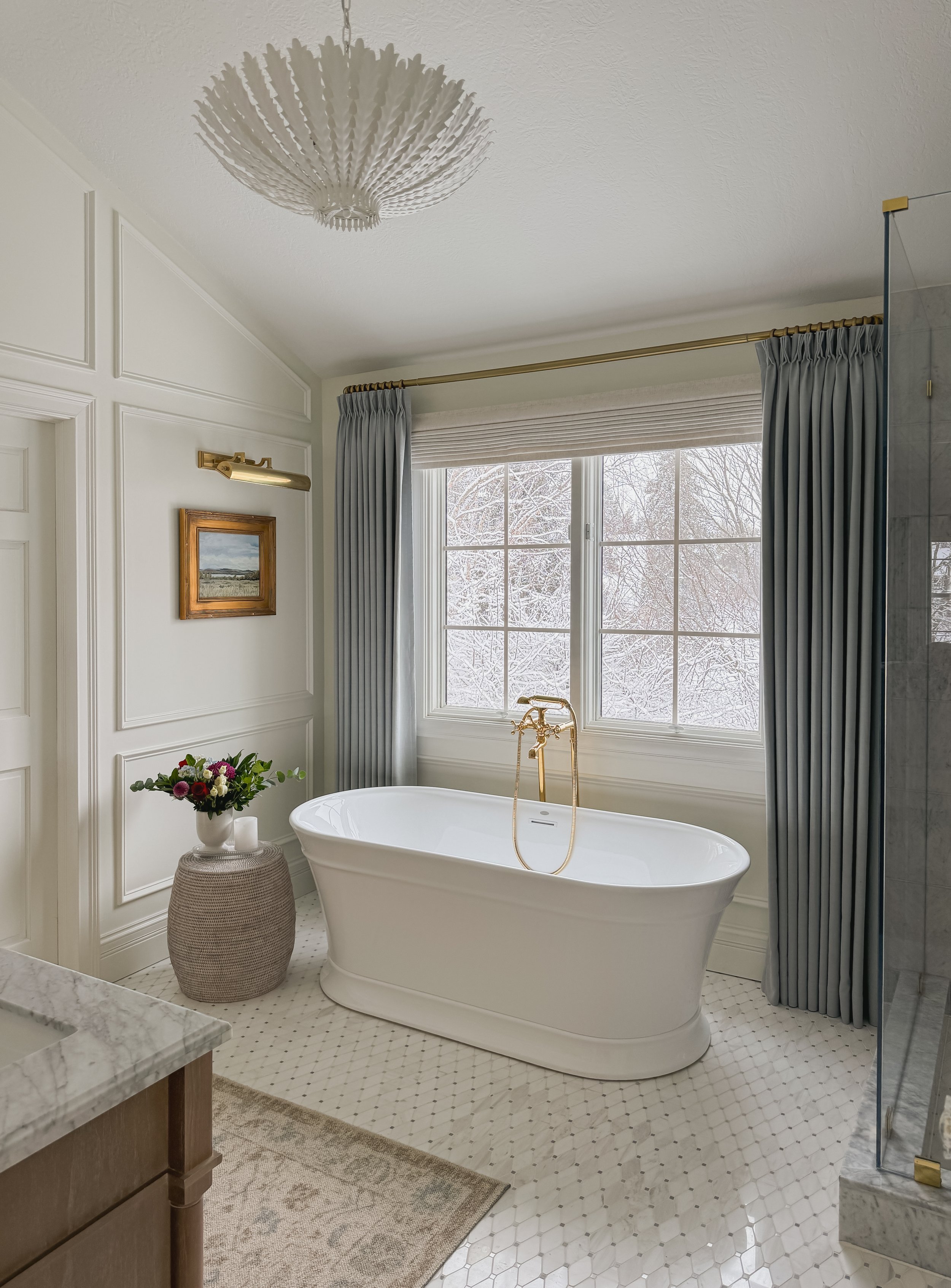
> Pro Tip:> I do not suggest going unlined. Unlined panels will not give you that high-end, custom look these curtains are known for, and they'll feel thin and a little lackluster. Opting for a thicker lining is what will give the finished look of your curtains a luxurious, magazine-worthy feel.
Here's a quick breakdown of the lining weights and where I use each one:
| Lining Type | Weight | Best For |
|---|---|---|
| Privacy Liner | 90 GSM | Roman shades, light privacy |
| Room Darkening | 140 GSM | Curtain panels, everyday rooms |
| Blackout Liner | 220 GSM | Bedrooms, media rooms |
| Thermal Blackout | 250 GSM | Maximum light & temperature control |
In my own home, I use room darkening (140 GSM) on all of my curtain panels, and the privacy liner (90 GSM) on all of my roman shades. That combination gives me a soft, room-darkening drape on the curtains, plus a roman shade that still lets in some gentle light when it's down but offers privacy from the street.
As long as you've hung your curtains high and wide, opting for a thicker lining will not have an affect on the natural light in your home.
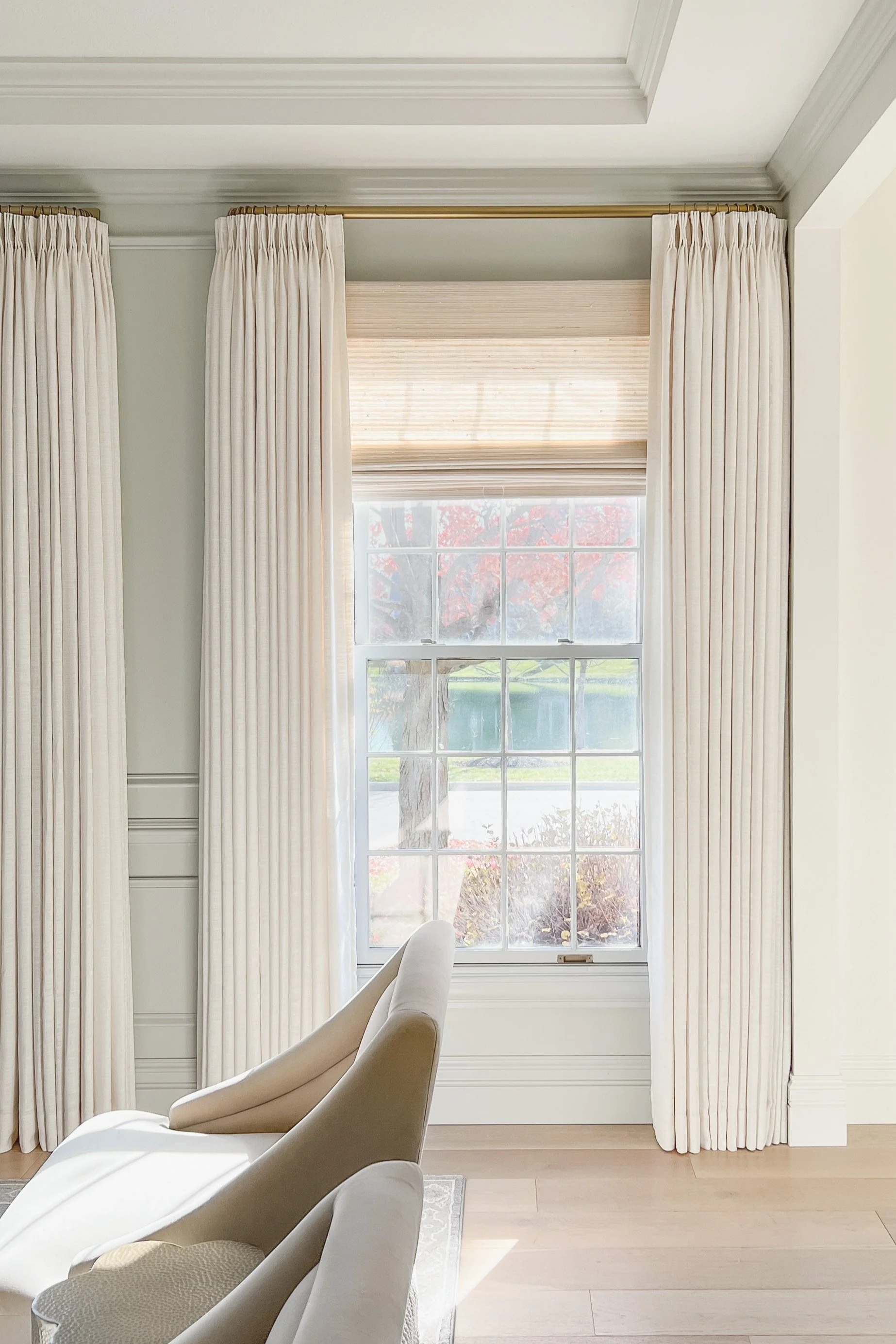
If you want to sample lining options before committing, ordering a swatch book and holding the individual swatches up against your window is genuinely the easiest way to feel their weight, texture, and light blocking ability for yourself.
Shop: Curtain Lining Swatch Book
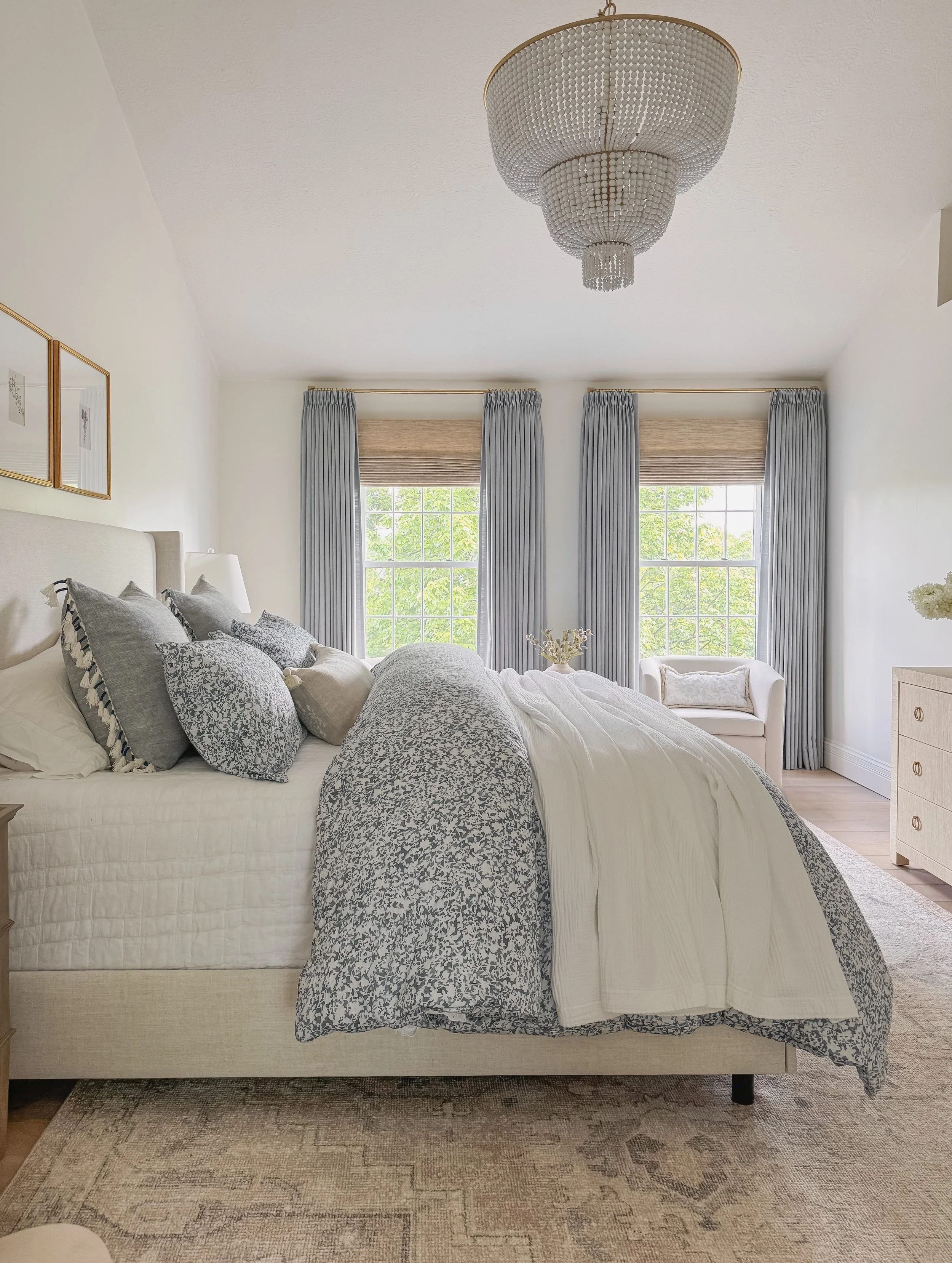
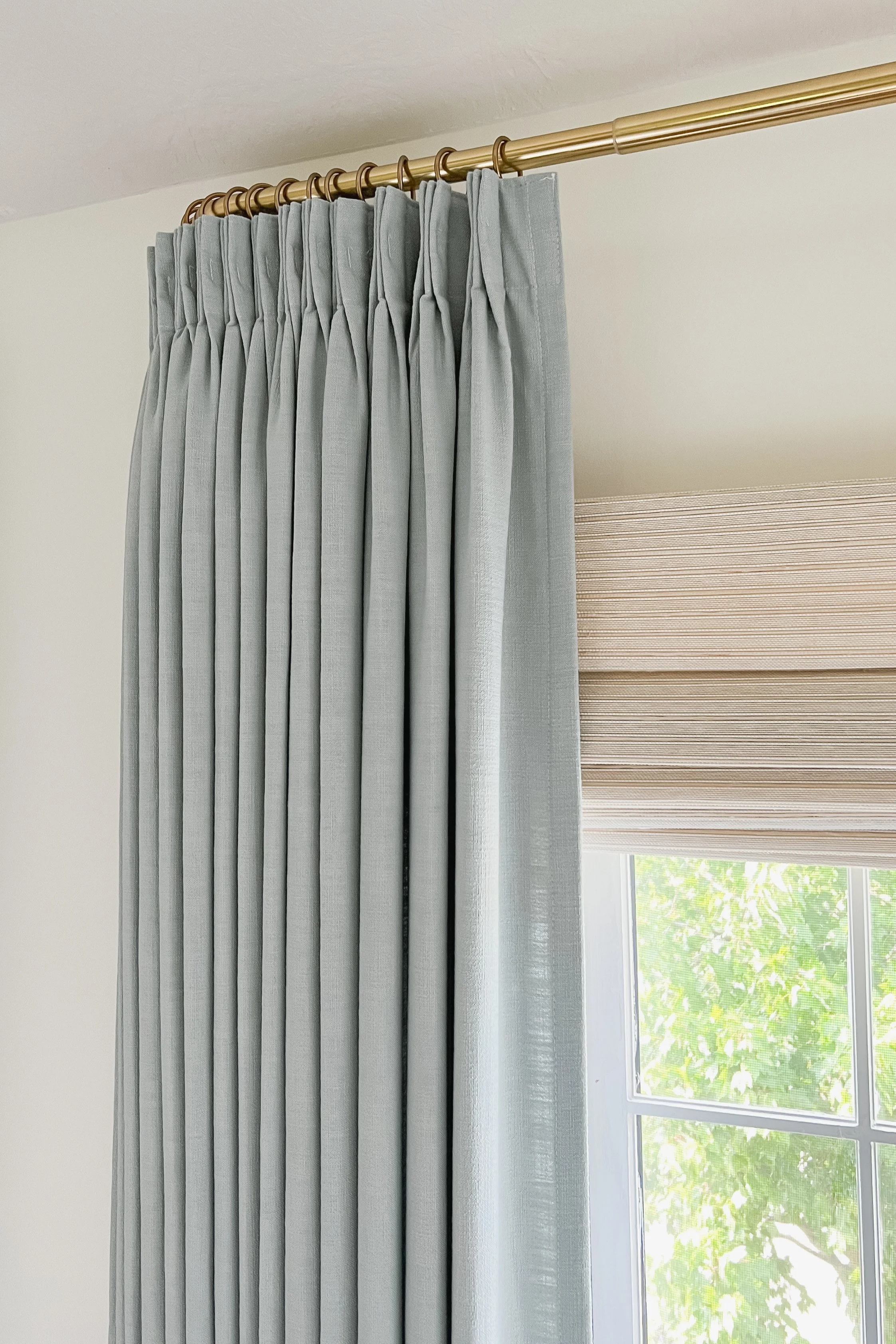
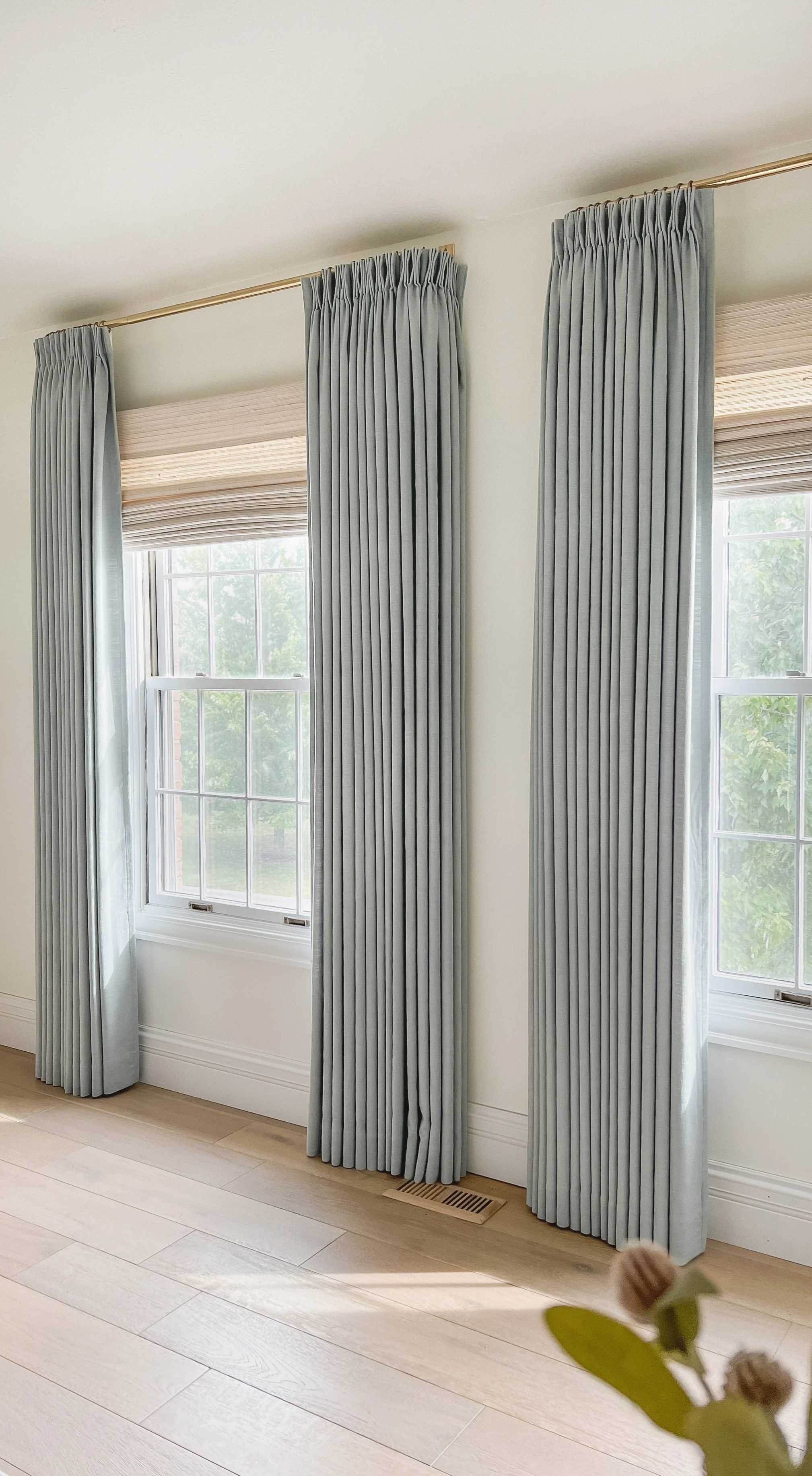
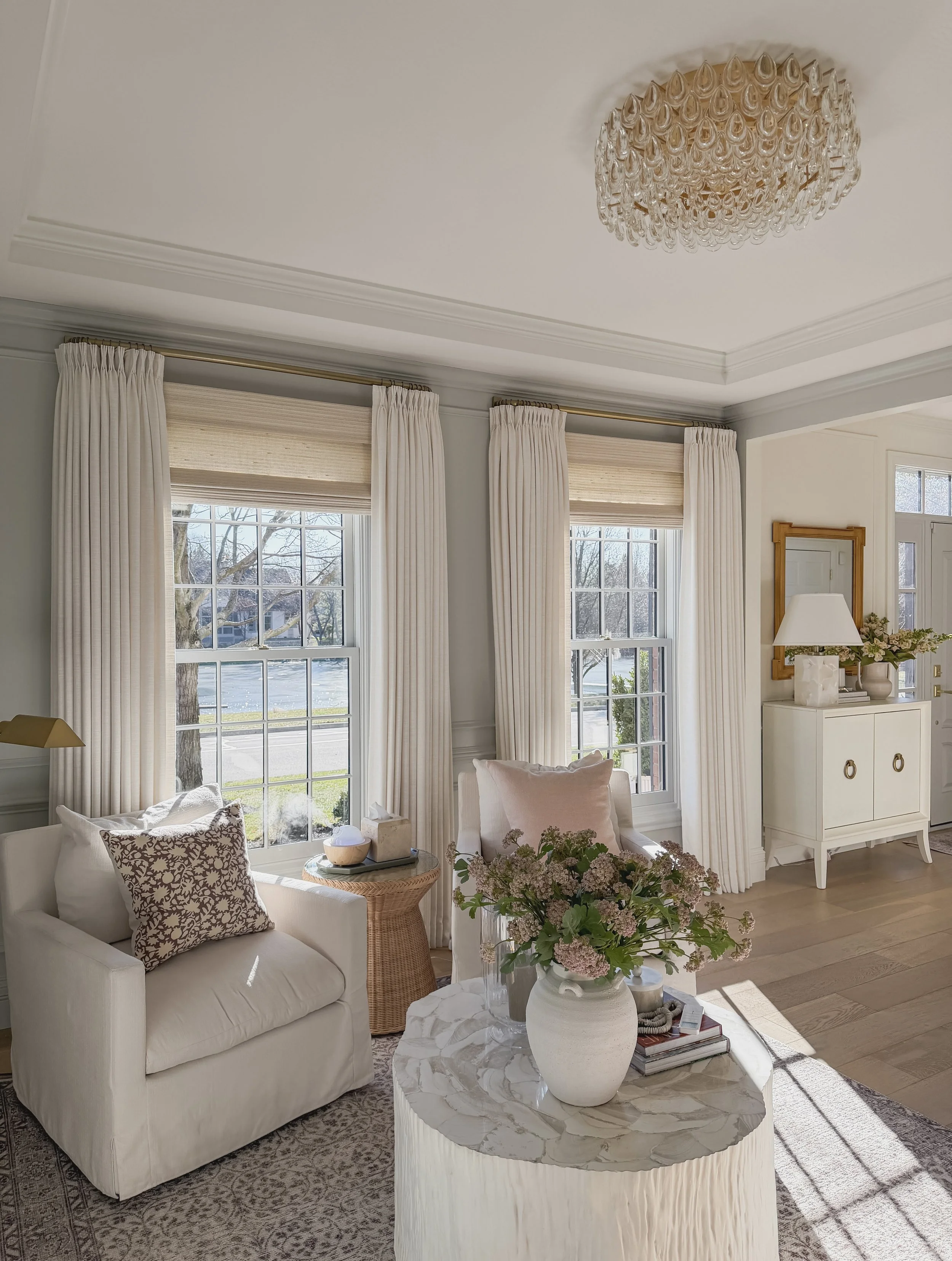
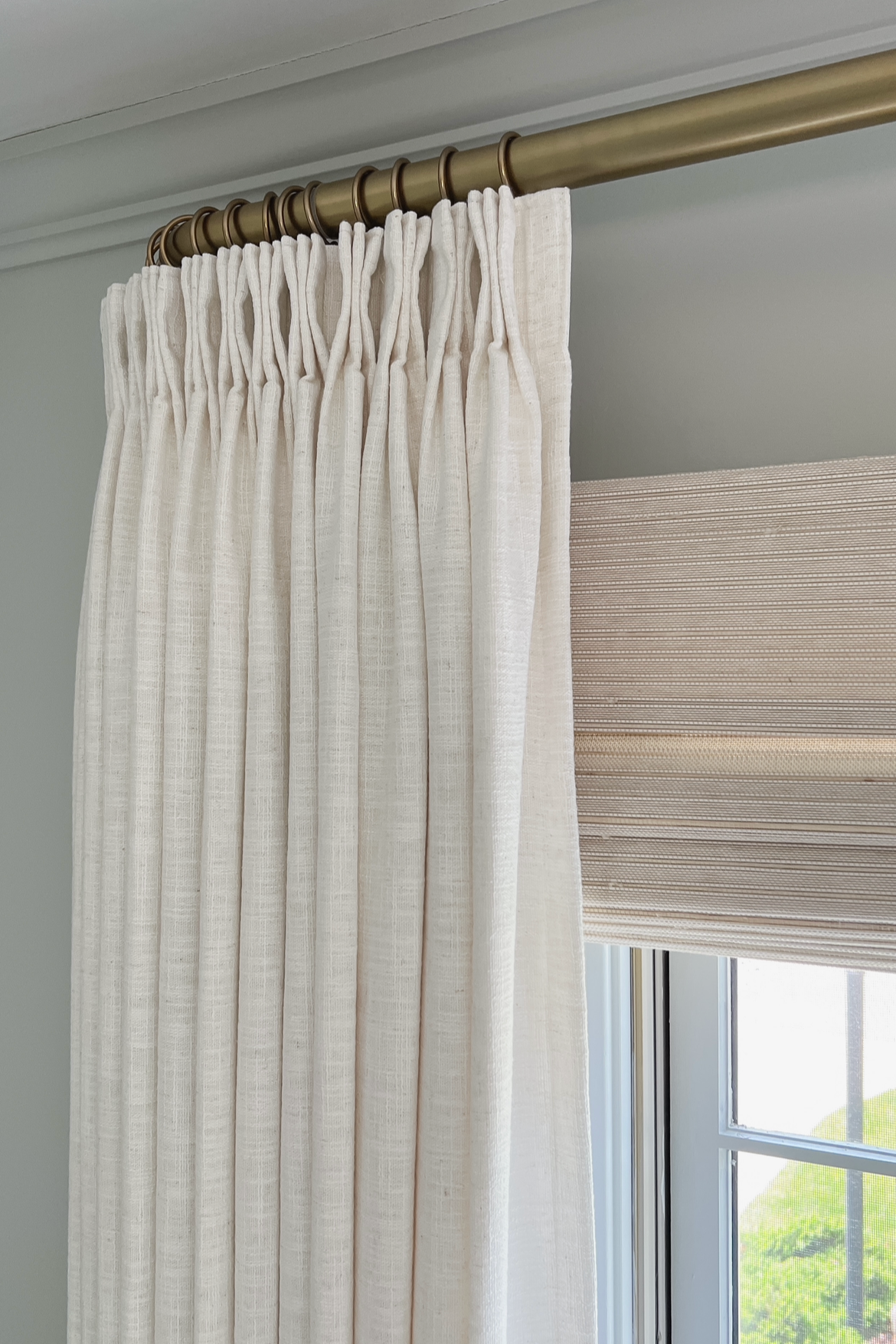
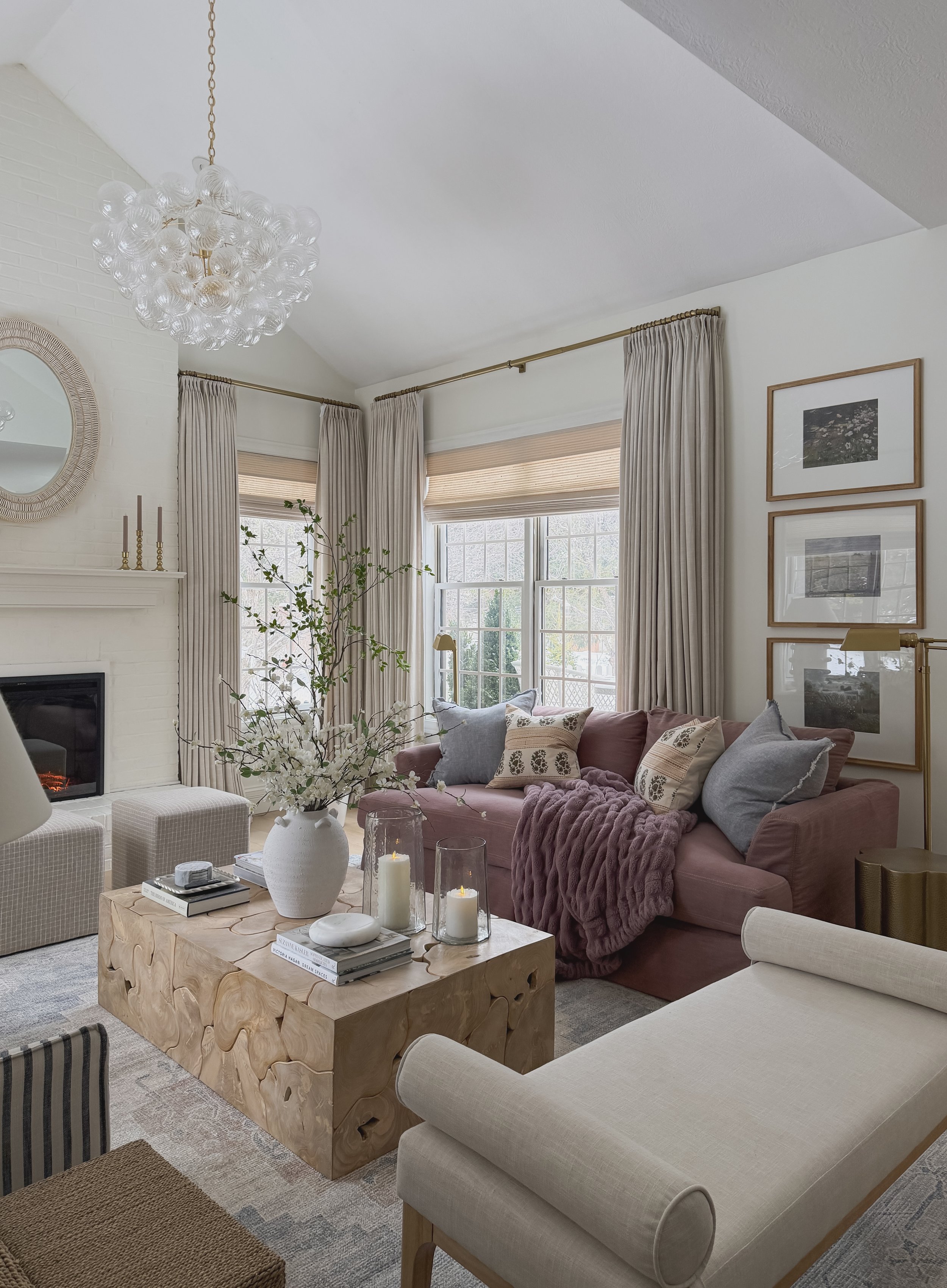
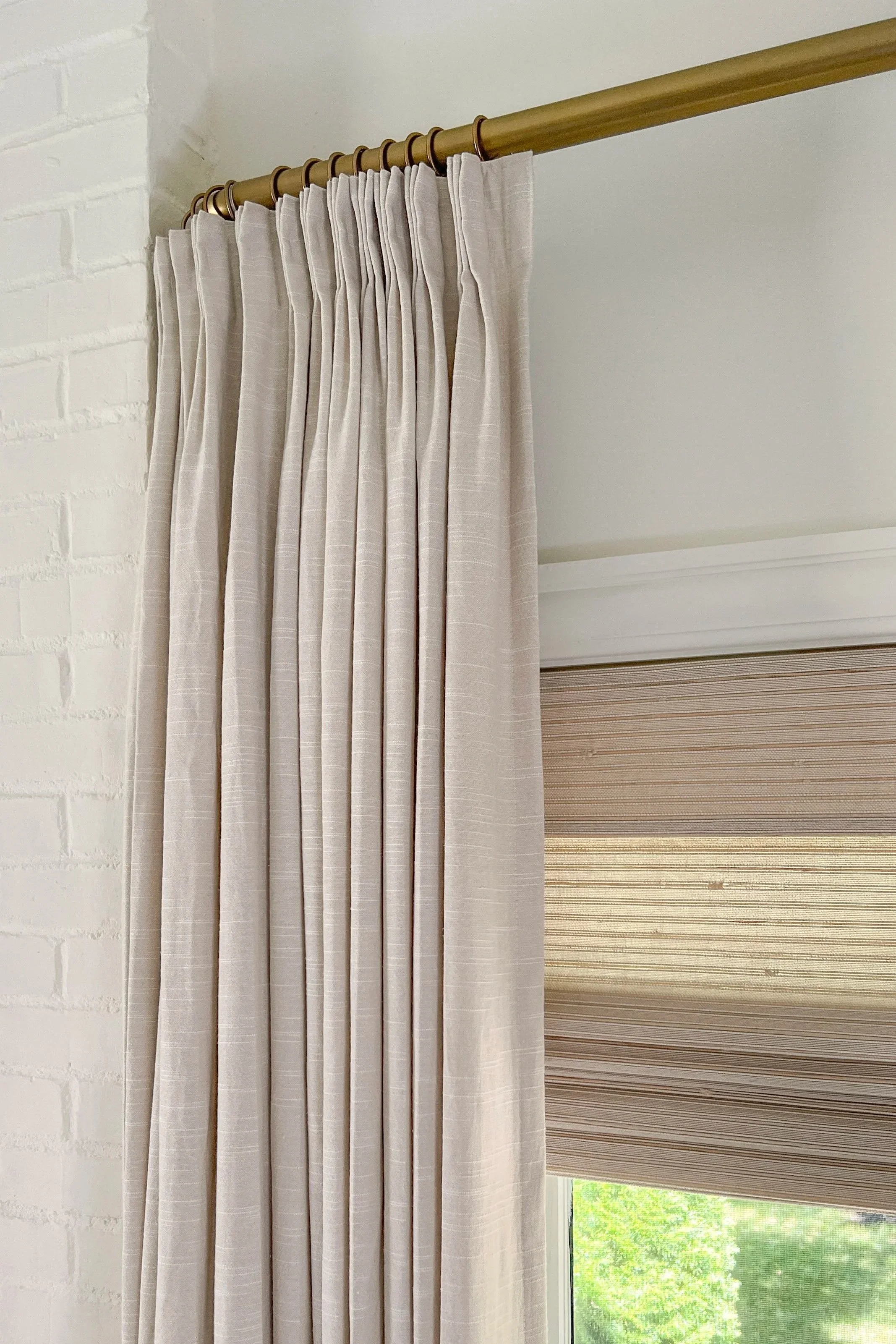
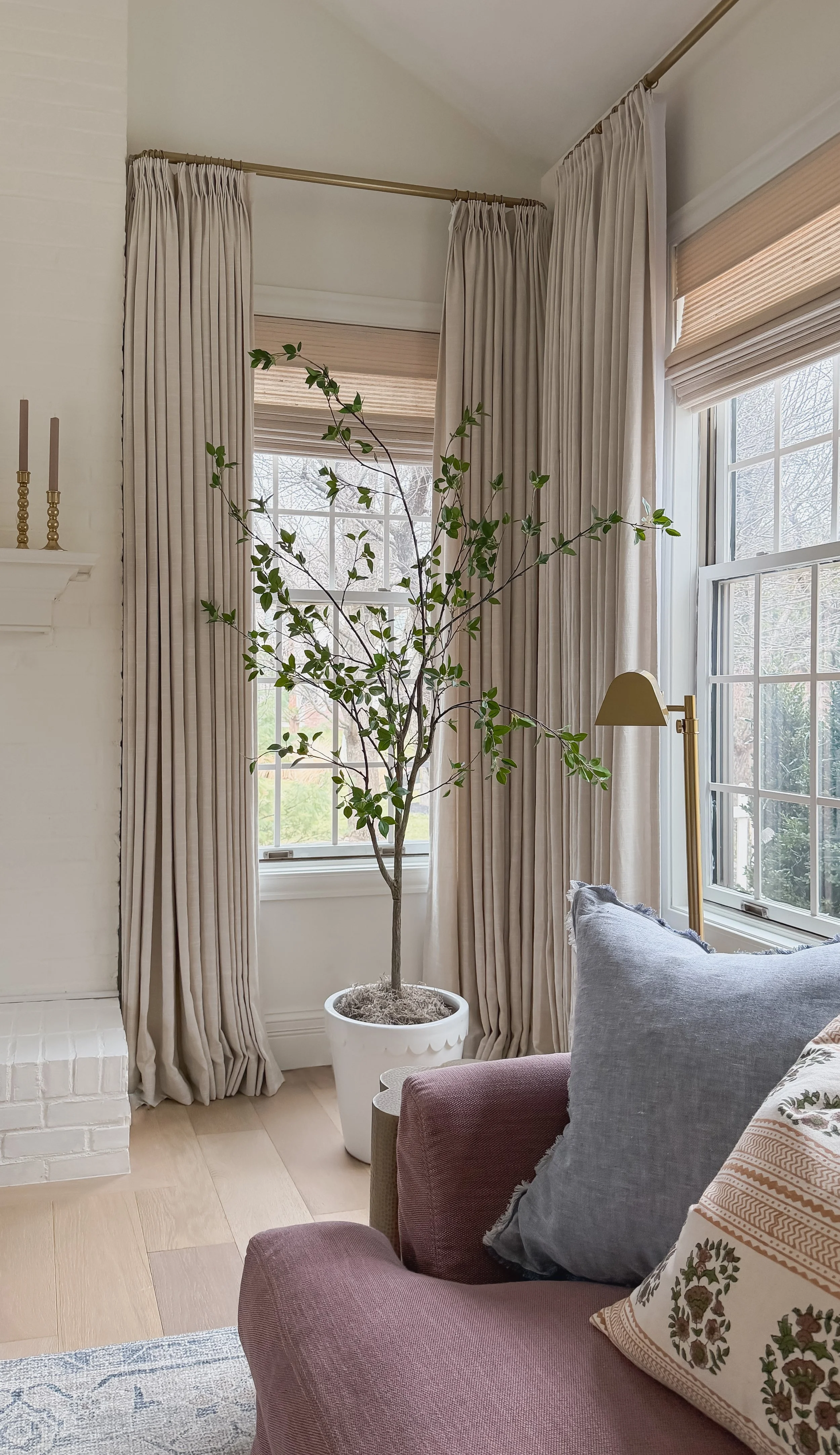
- Isabella – Winter Sky — A muted blue-grey heavyweight cotton that reads soft and calming. I used this in my primary bedroom paired with a Marble White roman shade, and in my primary bathroom paired with a Liz Ivory White Motorized roman shade. It's one of my favorite combinations in the whole house.
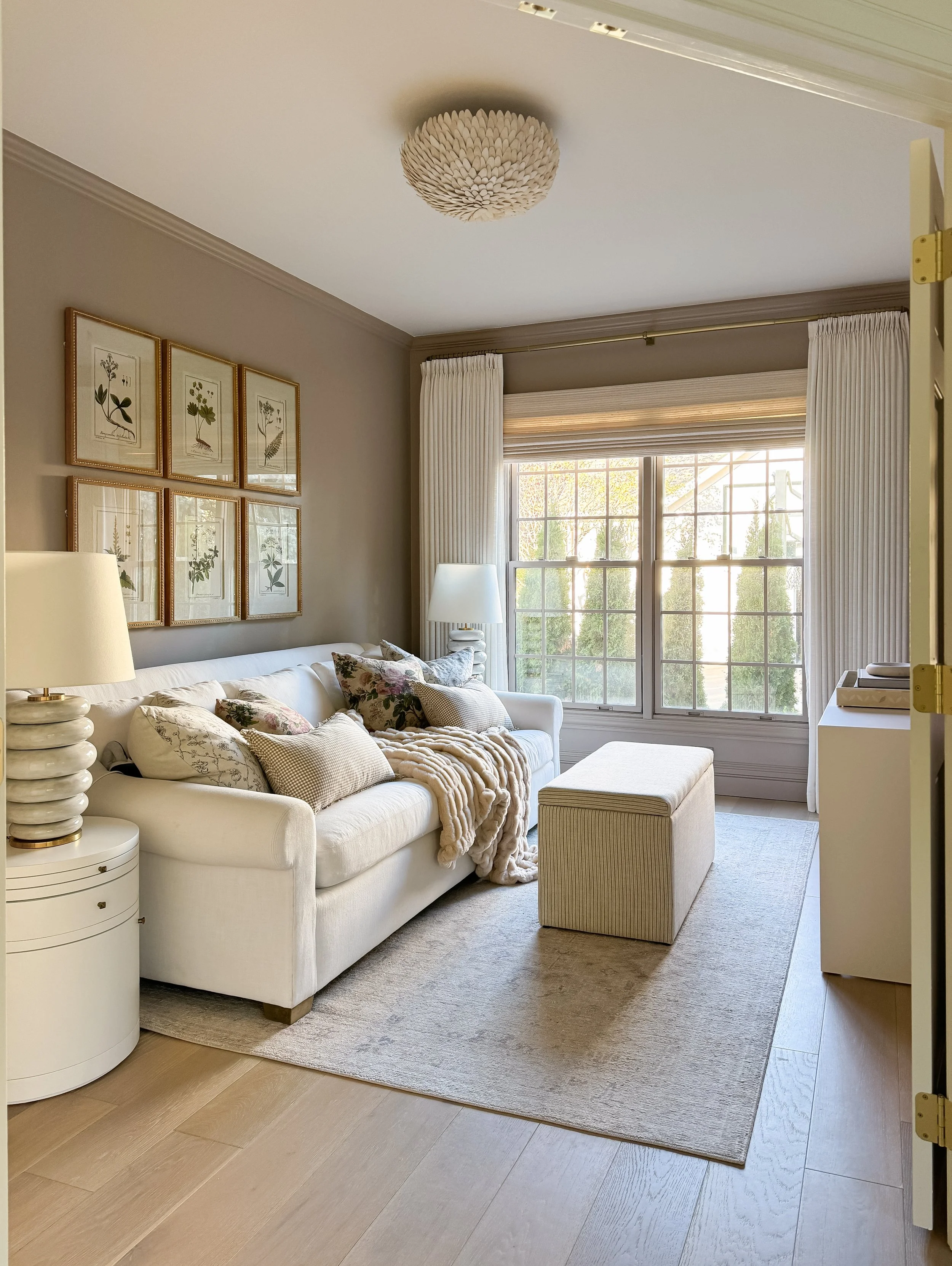
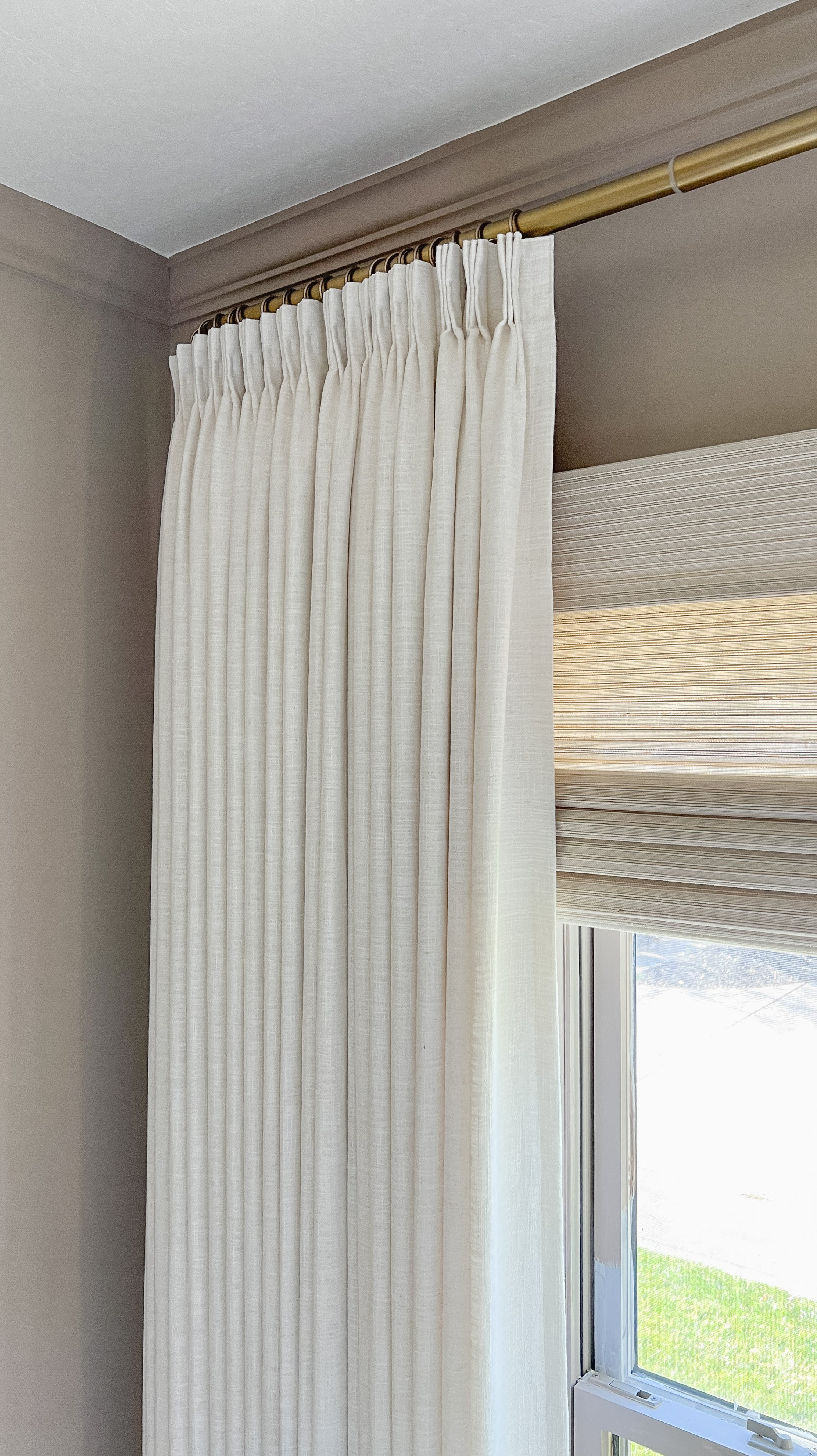
- Liz – Ivory White — A warm, soft white that pairs beautifully with wood tones, brass hardware, and most wallpaper. This is my go-to for almost any room color. The color works nicely in a tonal, light and bright space as well as a dark and moody space to add a bit of contrast and warmth.
- Jawara – Ivory Beige — Slightly warmer and more textural than Liz, this one has a relaxed, lived-in feel that works really well in almost any space in your home.
- Stefana Silber – Windowpane White Carbon (W118) — A subtle windowpane pattern in white and carbon. I used this in my husband's home office, and it adds just enough pattern without feeling busy.
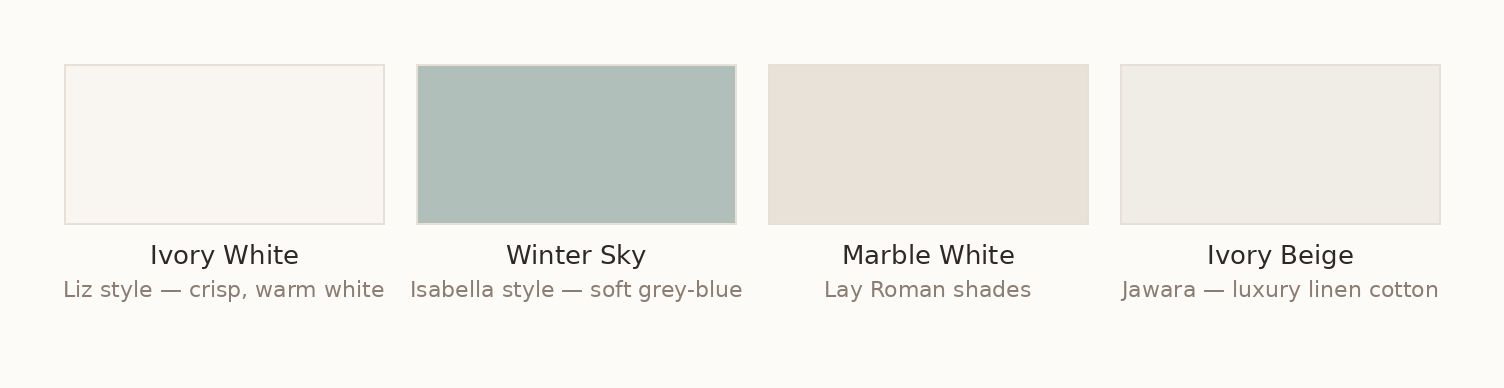
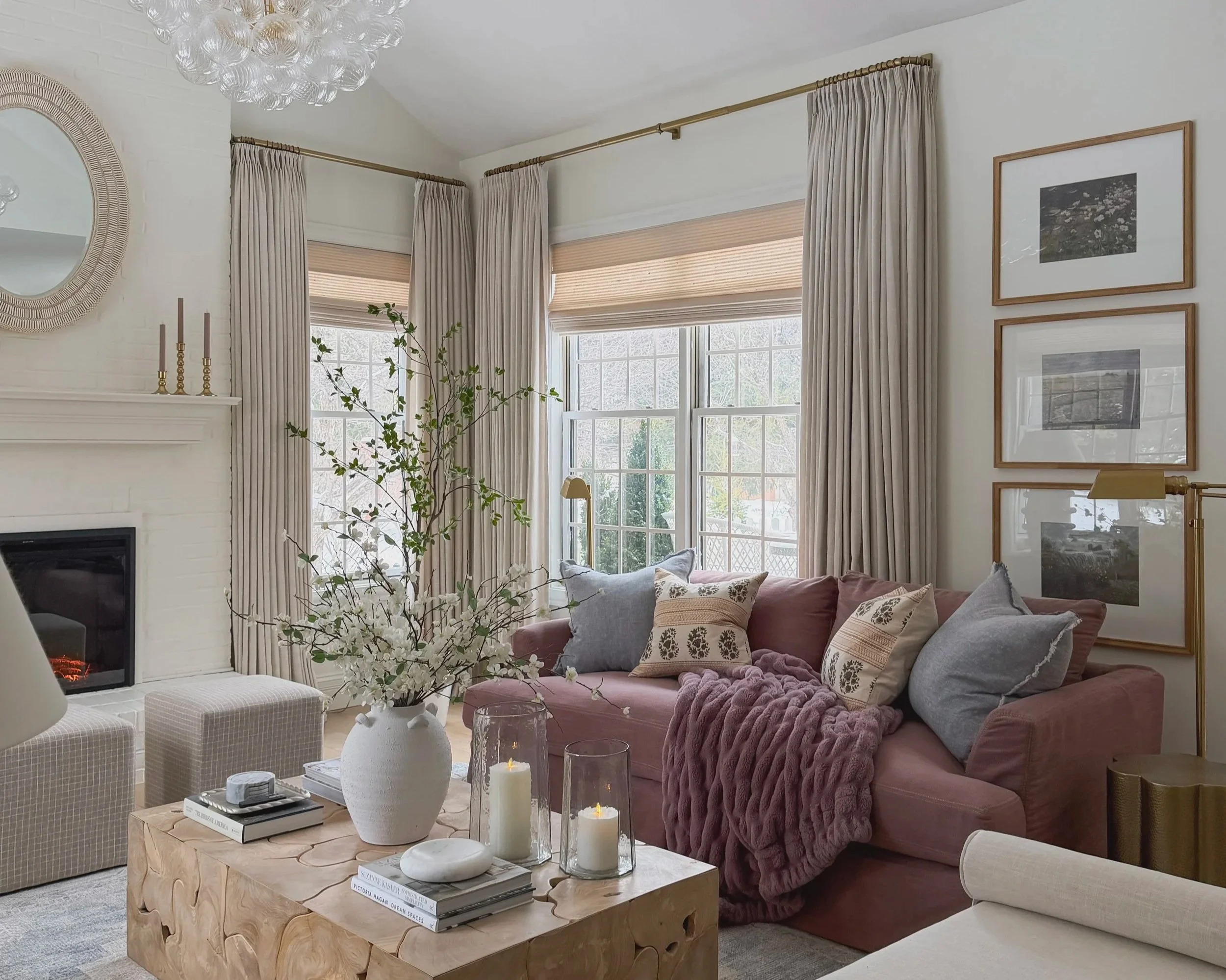
For the roman shades, I almost always go with the Lay style:
- Lay – Marble White — A soft, warm white that reads neutral against most wall colors. This is the one I use most throughout my main living spaces.
- Lay – Coconut — A slightly deeper, warmer tone that I used on the motorized shades in our primary bedroom for a cozier feel.
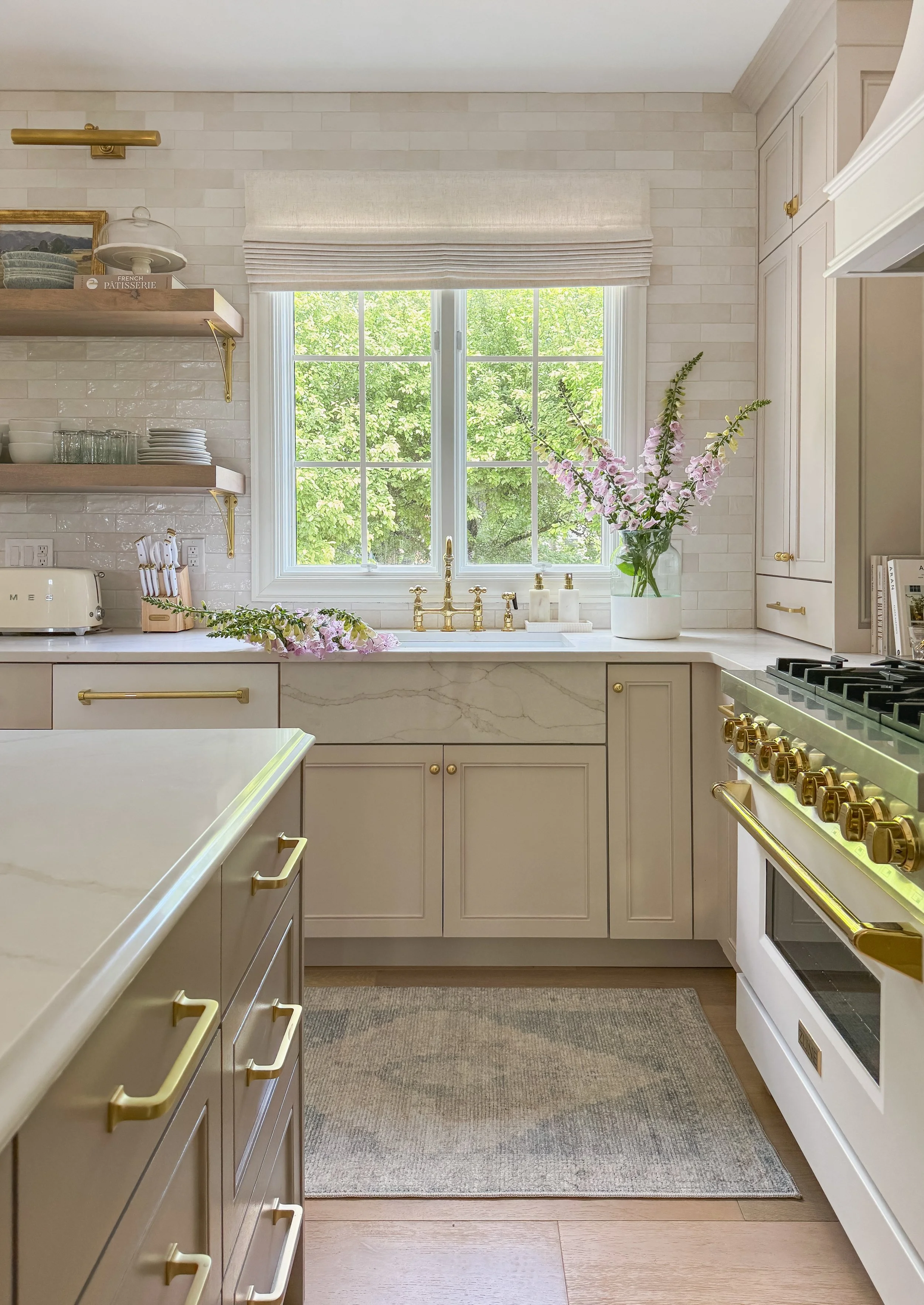
I also have fabric roman shades in a couple rooms in my home. For those I've chosen the Liz - Ivory White motorized shades in my kitchen and primary bathroom.
Shop:Isabella Winter Sky Curtains · Liz Ivory White Curtains · Jawara Ivory Beige Curtains · Stefana Silber Windowpane Curtains
A quick tip on color: if you're between two shades, order swatches first. Lighting changes everything, and a color that looks perfect in a photo can read totally different in your space depending on natural light.
Hardware: Rods, Rings, and Mounting
Section 06
Your curtains can be perfectly sized and beautifully lined, and still look "off" if the hardware isn't right. Here's what I use throughout my home.
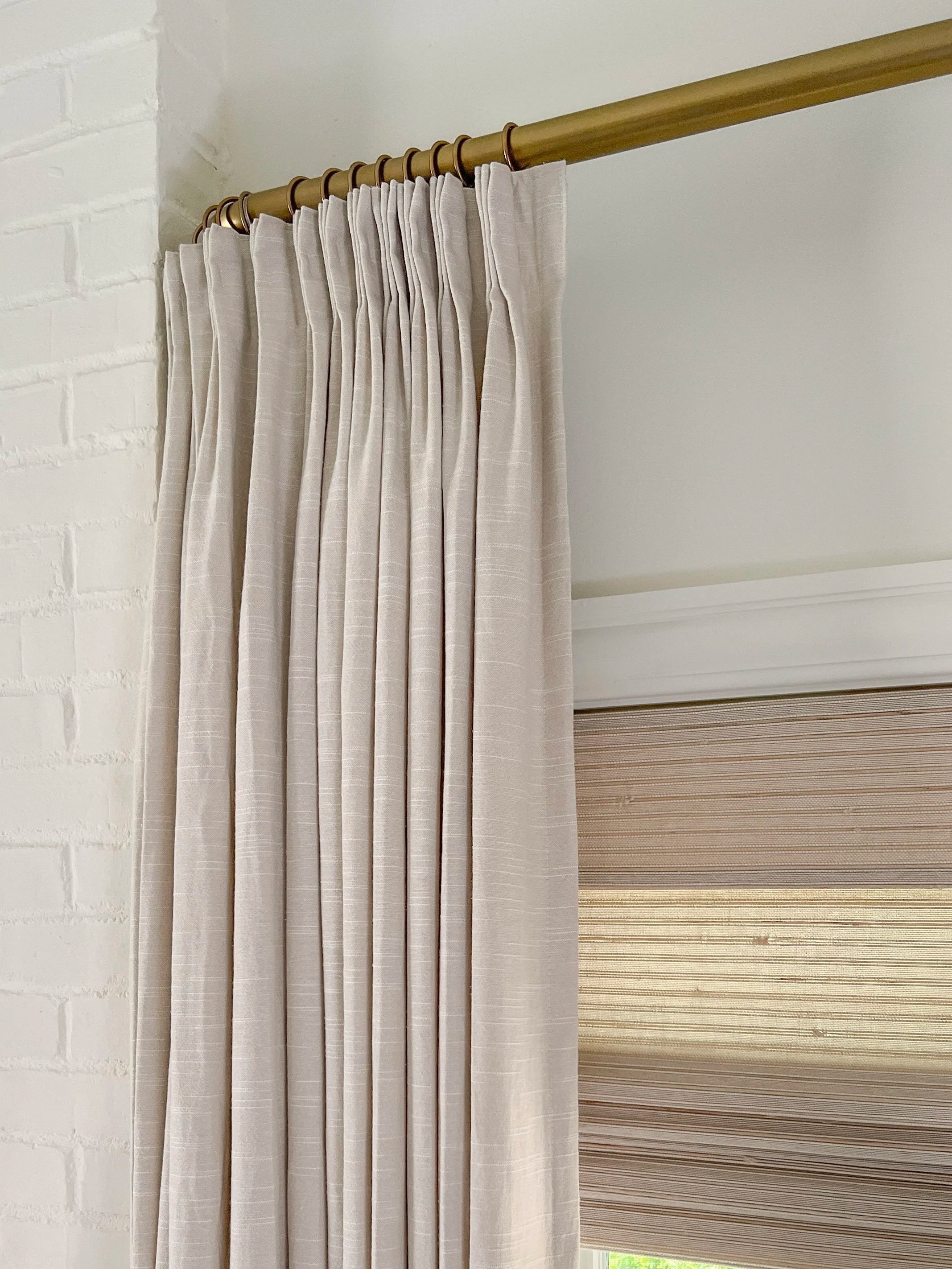
Curtain Rods
I have brass French return curtain rods throughout my entire house. The "French return" detail (where the rod curves back toward the wall at each end) is what gives that seamless, no-gap-at-the-corners look.
On my first floor, I used a 1.25" diameter rod for all windows since it's substantial enough to hold a fuller, heavier panel without bowing.
For the second floor of my house, I switched to a more affordable 1" diameter French return rod option that gives a very similar look at a lower price point — perfect if you're outfitting a lot of windows at once.
Shop:Brass French Return Curtain Rod in 1.25" Diameter · Affordable French Return Curtain Rods
Curtain Rings
For pinch pleat panels, you'll need rings to clip onto the rod. I use these brass curtain rings to match my 1.25" diameter rods, but if you're working with a tighter budget (or opt for the more affordable 1" rods I have on my second floor), there's a really affordable option on Amazon in a warm gold finish that still looks great.
Shop:Curtain Rings in Brass · Affordable Amazon Curtain Rings in Warm Gold
Mounting Anchors
Here's something that doesn't get talked about enough: wall anchors matter. A full curtain panel with a quality lining has real weight to it, and a flimsy anchor is a recipe for a rod crashing down (trust me, I've heard the horror stories). I only use one specific type of wall anchor when mounting curtain rods, and it's made all the difference for keeping everything secure long-term.
Shop:Wall Anchors for Mounting Curtain Rods
Motorized vs. Cordless Roman Shades
Section 07
If you're on the fence about motorized shades, I want to walk you through why I made the switch — and where I think cordless still makes sense.
Why I Love Motorized
My favorite thing about motorized roman shades is that one remote can control up to 15 shades, and they can all be opened or closed at the same time. I have a hub (Bond Bridge) that connects everything to an app on my phone, and I can also control the shades with voice commands through Google Home or Alexa. It also allows me to set schedules in the app for when I want my curtains to open and close automatically, so I literally never have to do a thing!
You can also set a max height for when the shades open, so the exterior of your home always has a clean, polished look — even if someone in the house opens the shades all the way up out of habit. I like my shades to only open about 3/4 of the way so you can still see a bit of the shade fabric.
Shop:Motorized Bamboo Roman Shades in Lay – Coconut · Bond Bridge Smart Home Hub
Where Cordless Still Makes Sense
For smaller windows, secondary rooms, or anywhere you don't need daily adjustments, cordless is a totally reasonable (and more budget-friendly) option. I have a mix of both throughout my home — motorized in the rooms I'm adjusting daily, cordless everywhere else.
Shop:Cordless Bamboo Roman Shades in Lay – Marble White
FAQ
Do you have a coupon code?
Yes! My exclusive coupon code BLUSHINGBOHO never expires and will get you the highest discount that TWOPAGES is currently offering. While the discount fluctuates from month to month, it will always offer you the deepest discount on everything on the TWOPAGES website.
How much extra width should I add for curtains?
It depends on your window width. For windows under 50" wide, aim for 1–2x the width of the window per panel. For windows over 50" wide, aim for 1–1.5x the width. The absolute max I'd ever recommend is 150" per panel — anything wider gets heavy and unwieldy fast.
Should I do an inside mount or outside mount for my roman shades?
If your window frame depth is at least 2", inside mount gives a clean, built-in look. If your frame depth is less than 2", or you want your window to visually appear larger, go with an outside mount instead.
Do TwoPages curtains come with a lining?
Yes — they're fully customizable, with seven lining options ranging from completely unlined to full blackout. I do not recommend going unlined, since the lining is really what gives these curtains their high-end, custom feel.
What lining do you personally use?
I use room darkening (140 GSM) on all of my curtain panels, and the privacy liner (90 GSM) on all of my roman shades.
How high should I mount my curtain rod?
As close to the ceiling as possible, leaving just a few inches (about 3-5") of clearance. Mounting high — rather than directly above the window frame — makes ceilings feel taller and the whole window treatment feel more intentional.
What's the difference between motorized and cordless roman shades?
Motorized shades can be controlled via a remote, an app, or voice assistants like Alexa or Google Home, and one remote can control up to 15 shades at once. Cordless shades are operated by hand and are a more budget-friendly option for smaller or less-used windows.
Thanks for reading! Have a question about your own space? Drop it in the comments — I read every one.
This post may contain affiliate links. If you purchase through one of these links, I may earn a small commission at no extra cost to you.